
The $3.1 Billion Wake-Up Call
2025 has officially become the most devastating year on record for cryptocurrency security. In the first six months alone, data from Hacken, Chainalysis, and CertiK confirm that over $3.1 billion was lost to theft and wallet compromises—a figure that already eclipses the entirety of 2024. As a security researcher, I see users frequently treat their 12 or 24-word recovery phrases as mere passwords. This is a fatal misconception.
In reality, your seed phrase is the “Master Mold” of your entire financial sovereignty. It is a human-readable representation of high-level entropy that serves as the root of a Hierarchical Deterministic (HD) tree. While a hardware wallet acts as the steel door to the vault, the seed phrase is the genetic blueprint of the vault itself. If the mold is compromised, an attacker does not need your device or your PIN; they simply reconstruct the entire tree and walk away with your future.
The “Photo Gallery” Trap: Why AI Is Scanning Your Screenshots
For years, the “hidden in plain sight” strategy involved burying a screenshot of a seed phrase in a library of thousands of photos. In 2025, this is no longer a viable defense. The emergence of AI-powered Optical Character Recognition (OCR) malware has turned every smartphone gallery into a searchable database for hackers.
The definitive turning point occurred earlier this year with the discovery of SparkCat, the first stealer Trojan to successfully infiltrate the official Apple App Store. Masked as a legitimate food delivery service called “ComeCome,” the malware requested gallery access under the guise of customer support chat functionality. Once granted, it utilized the Google ML Kit to scan images in milliseconds.
Warning: AI-driven Trojans no longer require a file to be named “seed.txt.” These models are specifically “trained” to detect the relevant script in photos, scanning for “mnemonic” keywords and “meaningless letter combinations” found in backup codes or specific word sequences in seed phrases.
Digital Storage Is a “Donation” to Hackers
The industrialization of credential harvesting means that any seed phrase that has ever touched a keyboard, clipboard, or cloud service is effectively public property. The “Infostealer Pipeline”—fueled by malware families like Vidar, Lumma, and RedLine—operates with mechanical efficiency, feeding stolen logs into automated parsers to reconstruct scattered data.
| Digital Extraction Vector | Technical Mechanism |
| Clipboard Data | Monitoring copy-paste buffers for 12 or 24-word BIP39 strings. |
| Messaging Apps | Automated extraction of chat logs and shared media from Telegram and Discord. |
| Cloud Backups | Silent scraping of iCloud and Google Drive to sweep documents and synchronized photo galleries. |
| Browser Data | High-speed scraping of cookies, autofill data, and stored wallet configurations. |
The “6+6” Math Fail: Why Splitting Your Phrase Is Counterproductive
A common, dangerous practice is manually splitting a 12-word seed phrase into two 6-word pieces. While this provides a false sense of security, it ignores the mathematical reality of the BIP39 standard. A recovery phrase is not just a list of words; it includes a built-in checksum.
When you split a phrase, an attacker who discovers only one half (6 words) is not facing a blind search. Because the final words must satisfy the checksum requirements, the search space is reduced to a trivial level for specialized ASICs. By splitting the phrase manually, you have effectively doubled your points of failure—making recovery impossible if one half is lost—while simultaneously offering an attacker a computationally “doable” path to your assets.
Paper vs. Metal: The Survival Gap in Real-World Disasters
While most hardware wallets are packaged with paper recovery sheets, there is a fundamental “Biological Mismatch” between paper and the durability required for generational wealth. Residential fires occur every 89 seconds, frequently reaching 600°C (1,100°F) at eye level. Furthermore, electronic devices are inherently ephemeral; they are subject to battery swelling, component aging, and firmware obsolescence.
Physical metal, like 304-grade stainless steel, is one of the most suited archival medium that remains impervious to atmospheric moisture fluctuations and the environments that destroy electronics.
- Paper: Ignites at approximately 233°C (451°F); fibers disintegrate instantly in floodwater or high humidity.
- Stainless Steel (304): Melting point exceeds 1,400°C (2,550°F); virtually impervious to corrosion and structural collapse.
- Titanium: The current ceiling for consumer resilience, with a melting point above 1,650°C (3,000 °F).
The “Invisible Shield”: Using Obscurity as a Valid Security Layer
Historically, standards bodies discouraged “Security through Obscurity.” However, the modern cybersecurity landscape has evolved. The NIST 800-160 Vol. 2 framework now recognizes obscurity as a valid security tool when used as a complementary layer in a “Moving Target Defense” or “Cyber Deception” strategy.
Systems like KryptoDots apply this by translating words into a coordinate-based grid of punched dots on a stainless steel plate. This “Camouflage Security” deters the “Maid Attack”—where a house guest or contractor might notice a list of words and realize its value. To the untrained eye, a punched metal plate looks like a random industrial part or a piece of scrap metal, hiding your net worth in plain sight.
Shamir’s Secret Sharing: Eliminating the Single Point of Failure
For institutional-grade security, the “2-of-3” geographic distribution strategy using Shamir’s Secret Sharing (SLIP39) is the gold standard. Unlike manual splitting, this is a cryptographic scheme that creates unique “shares” of a secret.
Why SLIP39 is Superior: Finding a single Shamir share reveals zero information about the private keys. Because the words are cryptographically derived and not a simple manual split, an attacker who finds one share would still need to compromise a second location to gain any ground. This allows for total recovery even if one location is completely destroyed.
Conclusion: The “Morning After” Test
The final hurdle of security is not the hardware you buy, but your own vigilance. In the world of self-custody, the user is the sole security element that cannot be patched by a software update. Convenience is the primary vector for exploitation.
As you audit your security posture for the coming decade, you must pass the “Morning After” test: “If your house burned down tonight, could you walk back into the rubble tomorrow and recover your future?”
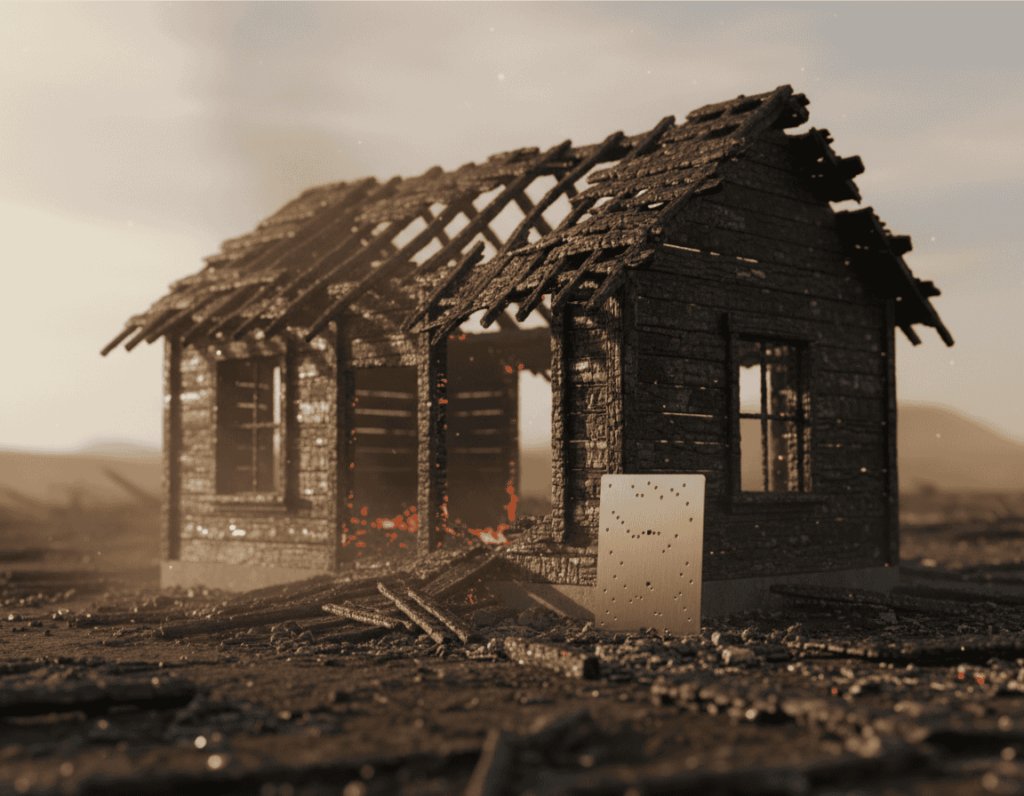
If your backup system relies on paper, a digital file, or the longevity of a battery-powered device, you are building a foundation for a weekend, not a lifetime. Ensure your wealth is anchored in a medium that survives the world your digital assets inhabit.
Leave a Reply